





Introduction
First time in Marseille: deciding whether to arrive by airport or train immediately shapes how you experience the city. Marseille, France’s second-largest urban area, blends working-class neighborhoods, a proud port tradition, and a Mediterranean vibe. Where you touch down affects not only the practical first moments of your trip (transfer time, cost, comfort) but also your first impression of the place: arriving in the heart of the historic center plunges you straight into city life, while landing at the airport often offers more flexibility for families and travelers with lots of luggage.
In this practical, in-depth guide I cover the two main entry points for visitors: Marseille-Provence Airport (Aéroport Marseille-Provence, 13727 Marignane Cedex, France) and Marseille-Saint-Charles Train Station (Boulevard Voltaire, 13232 Marseille Cedex 20, France). For each option you’ll find: exact addresses, transport options, typical durations and price ranges (in euros), usual opening hours, on-site services (left-luggage, car hire, information desks), and local tips to get your visit off to a good start. The goal is to help you decide based on your profile — business traveler in a hurry, tourist with suitcases, couple wanting to begin at the Vieux-Port, or hiker heading to the Calanques.
This guide also covers practical connections: how to reach the Vieux-Port, the Le Panier neighborhood, the Corniche, the Notre-Dame de la Garde basilica, and links to Aix-en-Provence or Cassis. You’ll find price benchmarks (taxis, shuttles, TER regional trains, metro, tram), and typical schedules to help plan your arrival and anticipate service opening hours. Finally, I share essential local tips: where to change money, where to store luggage, what kind of ticket to buy for a few days, and how to avoid rush-hour hassles.
One important note before we begin: prices and schedules here are reliable references but can change (seasonal timetables, occasional strikes, tariff updates). For exact travel details on the day, check real-time info on the official sites: www.marseille.aeroport.fr for the airport and www.sncf.com for the station and trains. Now, let’s dive into each option and the alternatives so you can start your first day in Marseille the right way.
1) Arriving at Marseille-Provence Airport: practical info, services and tips
Marseille-Provence Airport (Aéroport Marseille-Provence, 13727 Marignane Cedex) sits about 25 km northwest of Marseille city center. It’s the obvious entry point if you’re flying in, especially from international or European capitals. The two main terminals (Terminal 1 and Terminal 2) are well-equipped with shops, restaurants, car hire desks and traveler services.
Transfers to the city center:
- Airport ⇄ Saint-Charles Shuttle (Navette Marseille Aeroport): regular departures, journey time ~25–40 minutes depending on traffic, fare around €11 per person for a one-way ticket. Frequency: roughly every 20–30 minutes, generally from 05:00 to 00:30 (times vary by season). Departure point: the « Aéroport Marseille Provence – Arrivée » stop in front of each terminal.
- Local bus and TER train: there is no direct train from the runways. You can take a local bus or a free/local shuttle to the Vitrolles-Aéroport TER station (Gare de Vitrolles – Aéroport), then TER to Marseille-Saint-Charles (total time ~35–50 minutes). TER fares: around €4.50–€6.50 depending on destination.
- Taxi: official taxi ranks are outside each terminal. Indicative fares to the city center (Vieux-Port / Saint-Charles): €35–€55 depending on time of day (night surcharges). Journey time: 25–40 minutes.
- Car hire: major agencies (Avis, Hertz, Europcar, Sixt) are in the rental area, usually open 07:00–22:00 (some operate 24/7 by reservation). Daily rates vary by season, from about €25–€35/day for a small city car excluding insurance.
Useful services at the airport:
- Left-luggage / luggage services: private luggage and concierge companies operate at and near the airport (approximate rates €6–€10/day depending on size). Check the official site for details.
- Tourist information desks: located in arrival areas with city maps, advice and excursion bookings. Opening hours generally match main flight arrivals.
- Shops and dining: numerous cafés and restaurants open from around 05:00; duty-free shops and local-product stores are available.
Why choose the airport:
- Convenient for travelers with heavy luggage, strollers, or reduced mobility.
- Plenty of car rental options to head straight out and explore the region (Calanques, Aix-en-Provence, Camargue).
- Often better international and domestic connections if you’re coming from far away.
Drawbacks:
- Longer transfer time and usually higher cost to reach the center compared with arriving by train.
- Shuttle frequency drops late at night—if you arrive very late, plan for a taxi or pre-booked transfer.
2) Arriving at Marseille-Saint-Charles Station: instant immersion and connection options
Marseille-Saint-Charles Station (Boulevard Voltaire, 13232 Marseille Cedex 20) is the city’s rail hub. If you arrive by train (TGV, Intercités, TER), you step out practically in the historic center: the station plaza overlooks the city and you’re a short walk from the Vieux-Port and Le Panier neighborhood. The area is lively, with shops, cafés and traveler-friendly services.
Main connections from Saint-Charles:
- TGV / Intercités: direct links to Paris (Gare de Lyon), Lyon, Lille, Nice, Brussels seasonally. Paris–Marseille TGV time: about 3h05 to 3h30. Fares vary (from €25 in promotions to over €100 at peak rates).
- TER Provence-Alpes-Côte d’Azur: serves Aix-en-Provence (Aix-en-Provence TGV / Aix-en-Provence Centre), Toulon, Cassis and Bandol; short-trip fares: €3–€10 depending on destination.
- RTM urban network (metro, tram, bus): the « Saint-Charles » metro station (lines M1 and M2) reaches areas like Cours Julien, Castellane and the Prado. Single RTM ticket: about €1.90 (check current fares); multi-ride packs are usually cheaper.
Services at the station:
- Left-luggage: automated lockers and temporary drop-off desks at the station (approx. €7–€10/day depending on size). Handy for visiting the Vieux-Port luggage-free.
- SNCF information desks: ticket counters typically open from 06:00 to 22:00 (seasonal hours).
- Shops and eateries: bakeries, brasseries and kiosks open early morning and late into the evening.
Why choose the train station:
- Immediate access to the center and historic neighborhoods (Vieux-Port: Quai des Belges, 13001 Marseille — 10–15 minutes on foot).
- Perfect if you want to start with a city stroll, a coffee by the Vieux-Port, or a walk up to Notre-Dame de la Garde.
- Great for short regional trips and intercity connections (e.g. Aix-en-Provence 20–30 minutes).
Drawbacks:
- Less convenient if you have heavy luggage or arrive very late (fewer taxis available than at the airport).
- To reach peripheral sites (the Calanques, eastern coastline) you may need a bus or a rental car.
3) Practical comparison: time, cost, comfort and typical scenarios
To choose between the airport and the station, think about your priorities: budget, comfort, time and logistics. Here’s a concrete comparison and a few typical scenarios to help you decide.
Average transfer time to the Vieux-Port:
- From Marseille-Provence Airport: shuttle 25–40 minutes, taxi 25–40 minutes depending on traffic.
- From Saint-Charles Station: 10–15 minutes on foot to the Vieux-Port (Quai des Belges, 13001 Marseille); metro/tram rarely necessary.
Indicative costs (per person, average values):
- Airport shuttle → center: €11.
- Airport taxi → center: €35–€55.
- TER train Vitrolles → Marseille: €4.50–€6.50.
- Single RTM metro/bus ticket: €1.90 (indicative).
- Station left-luggage: €7–€10/day.
Typical scenarios:
- You’re here for a 48-hour weekend with carry-on luggage only: arriving by train (Saint-Charles) is often the best option for an immediate start (stroll around the Vieux-Port, restaurants, walkable sights).
- You’re traveling with family, a stroller, or elderly companions: the airport can be more convenient (space, accessible facilities, car hire). Prefer a taxi or rental car at the airport for extra comfort.
- You plan to explore the region (Cassis, Aix, Calanques): either hub works depending on your mode: car hire from the airport; TER regional trains from Saint-Charles or buses to Cassis from the Vieux-Port.
- Late arrival (after midnight): opt for a taxi or private transfer from the airport if you land very late; at the station some services may be limited overnight.
Practical tips:
- Book your shuttle or taxi in advance if you arrive during peak hours or late at night.
- If you’re staying several days, buy an RTM ticket pack if you plan to use public transport frequently to save money.
- For quick sightseeing: leave your luggage in the station locker for half a day, then take the time to climb to the Notre-Dame de la Garde (Rue Fort du Sanctuaire) for one of the best panoramic views of Marseille.
4) Recommended routes and local tips to kick off your stay
Once you’ve picked your arrival point, here are concrete routes and addresses to launch your Marseille discovery in the best possible way.
If you arrive at Saint-Charles:
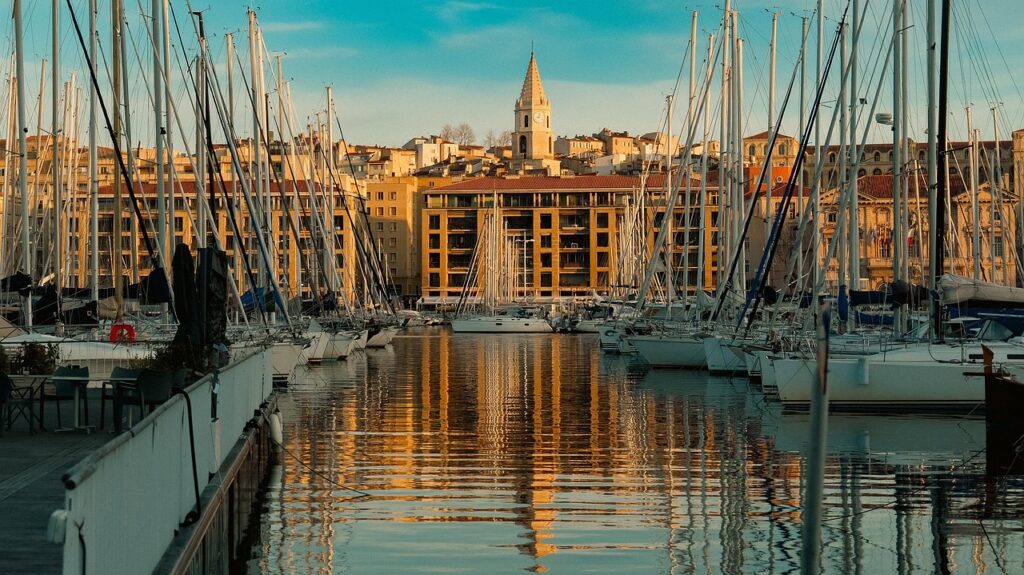
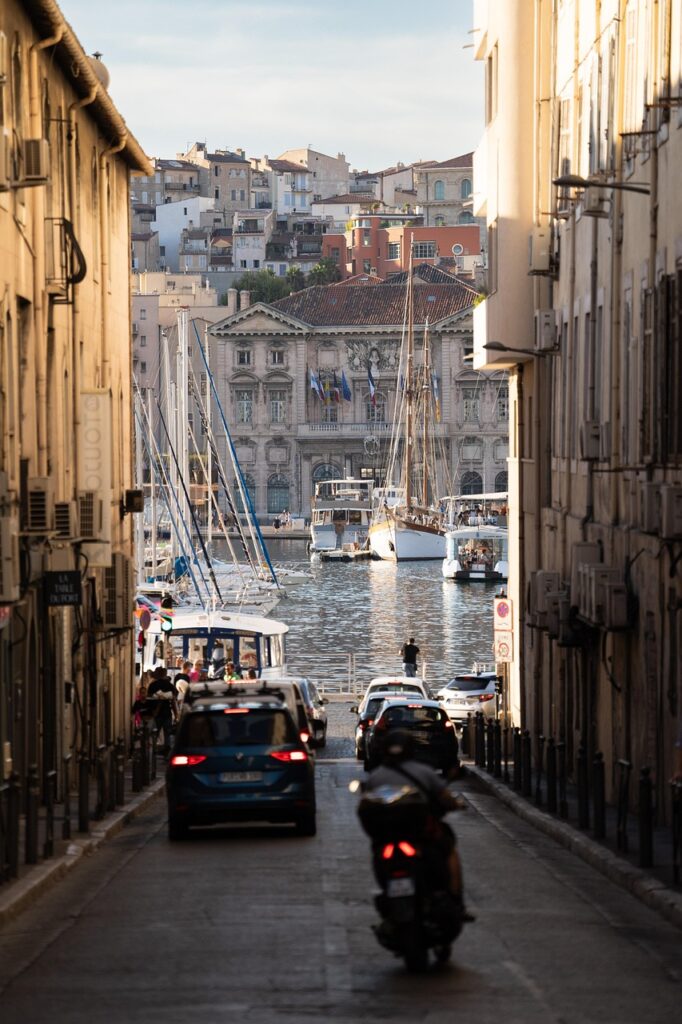
- Walk to the Vieux-Port (Quai des Belges, 13001 Marseille): 10–15 minutes. First stop suggestion: grab a coffee at Bar de la Marine or Café des Épices and watch the fishing boats come in.
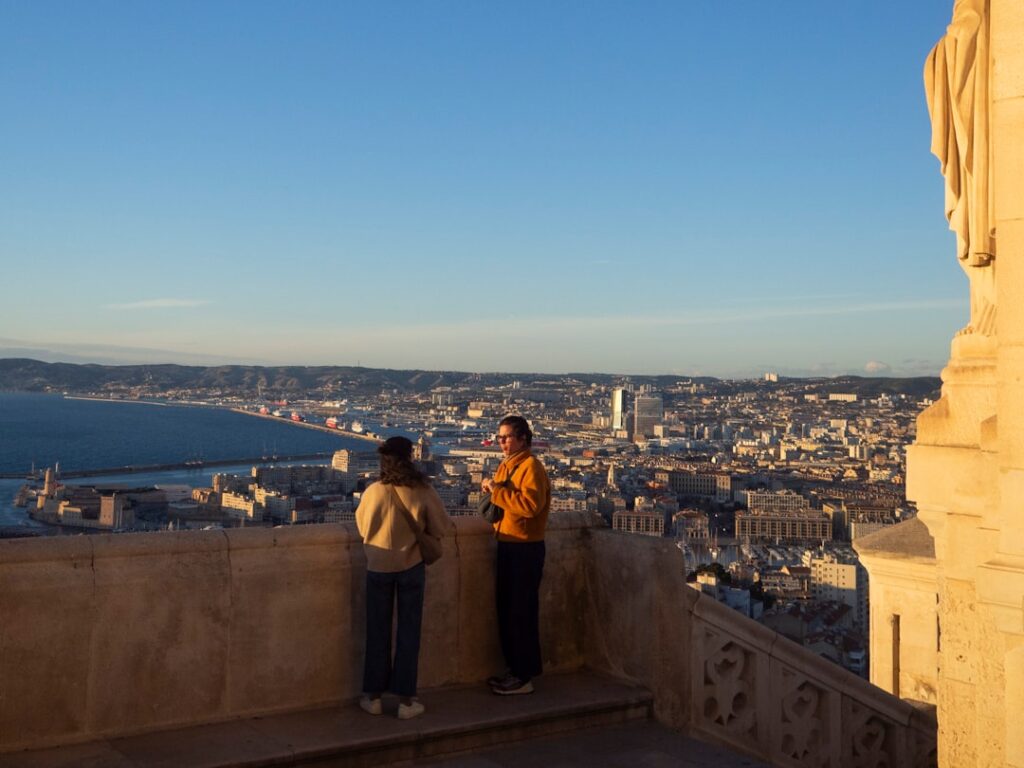
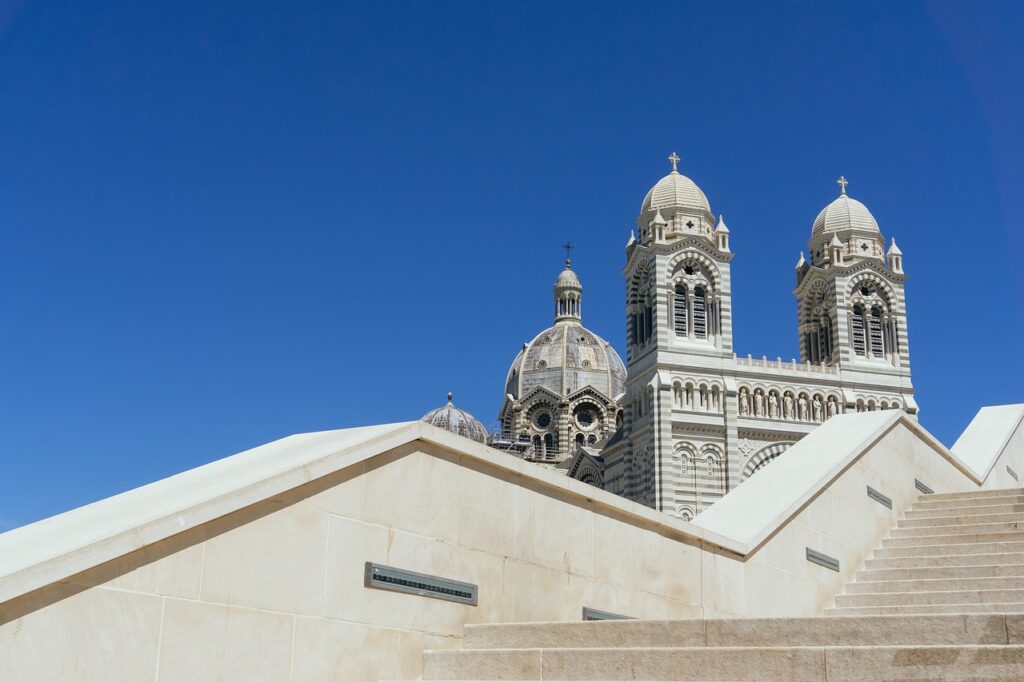
- Walk up to the Basilica of Notre-Dame de la Garde (Rue Fort du Sanctuaire). The walk up from the Vieux-Port takes about 25–35 minutes; alternatively, take the tourist bus or a taxi. Free entry; the panoramic view of the harbor is one of Marseille’s best photo spots.
- Lunch in Le Panier neighborhood (narrow streets, recommended spot: La Cantinetta, 23 Rue des Moulins, 13002 Marseille — mains and a glass are around €15–€25).
If you arrive at the Airport:
- Book the shuttle or a taxi to the center. Once at the Vieux-Port, drop your bags and head for a stroll along the Corniche (Corniche Kennedy) for your first taste of the Mediterranean.
- Visit the Prado district if you prefer green spaces and beaches, or head straight to the Calanques if you have a car: Parc National des Calanques (access via Cassis or Luminy).
- Short on time? Start with the Jetée du Prado or a boat tour from the Vieux-Port (daily departures, 1.5–3 hours, prices around €15–€30 depending on the excursion).
Practical local tips:
- Avoid unlicensed taxis: use official ranks, apps (Uber) or book through your hotel to avoid overcharging.
- Bring sunscreen and a water bottle in summer: Marseille can be very sunny and windy.
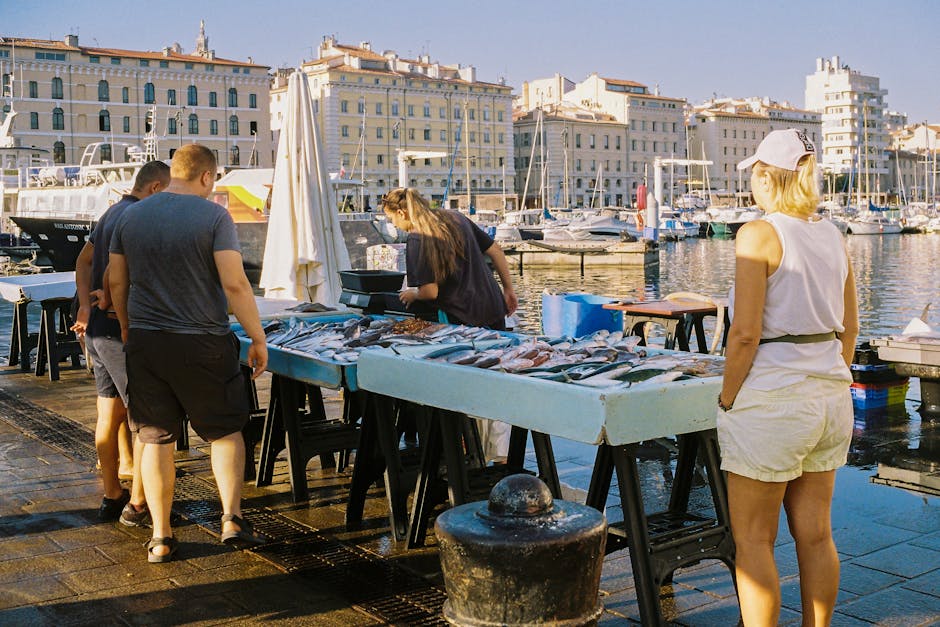
- Local markets (Cours Julien market, Vieux-Port morning market) are a great intro to Marseille’s gastronomy (bouillabaisse, aioli, fresh fish).
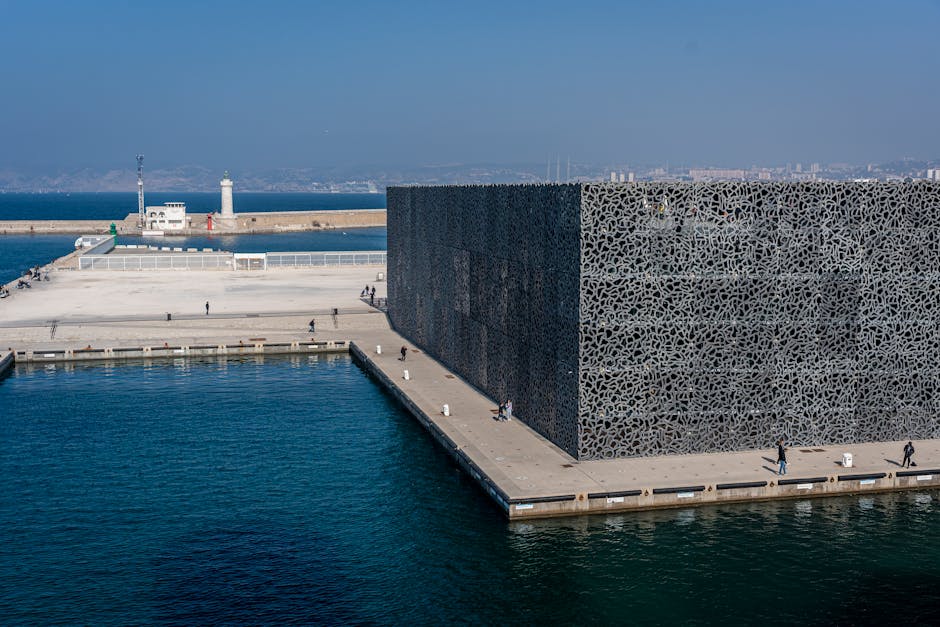
- For cultural visits, the MuCEM (1 Esplanade Robert Laffont, 13002 Marseille) and Fort Saint-Jean are close to the Vieux-Port; typical opening hours: 10:00–18:00, regular admission around €11–€15.
Conclusion
The choice between arriving at Marseille-Provence Airport (13727 Marignane Cedex) or Marseille-Saint-Charles Station (Boulevard Voltaire, 13232 Marseille Cedex 20) mainly depends on your priorities: time, budget, comfort and the goals of your trip. If you want instant immersion in Marseille life—the narrow streets and the Vieux-Port—Saint-Charles places you right in the middle of the action. If you arrive with lots of luggage, with family, or plan to rent a car to explore Provence and the Calanques, the airport offers logistical services and convenient rental desks.
In short:
- Choose the train station if you want to start straight away at the Vieux-Port, stroll through Le Panier, and take advantage of fast access to regional and TGV trains.
- Pick the airport if arrival comfort is your priority (families, accessibility needs, car hire) or if you have onward air connections.
- In any case, check shuttle and train schedules on the day, book (taxi, private transfer, car rental) if you arrive in off-peak hours or late at night, and leave your bags in a locker if you want to enjoy an unencumbered first half-day.
Finally, remember Marseille is a city to be lived: take time to listen to the waves at the Vieux-Port, taste local specialties, and chat with the locals who are always happy to share tips and favorite spots. Whether you land at the airport or the station, your first impression will be shaped by Mediterranean light, color and energy—so enjoy your stay and let the city surprise you.